The base of curries
Curry is a mix of spices. The two basic ingredients are
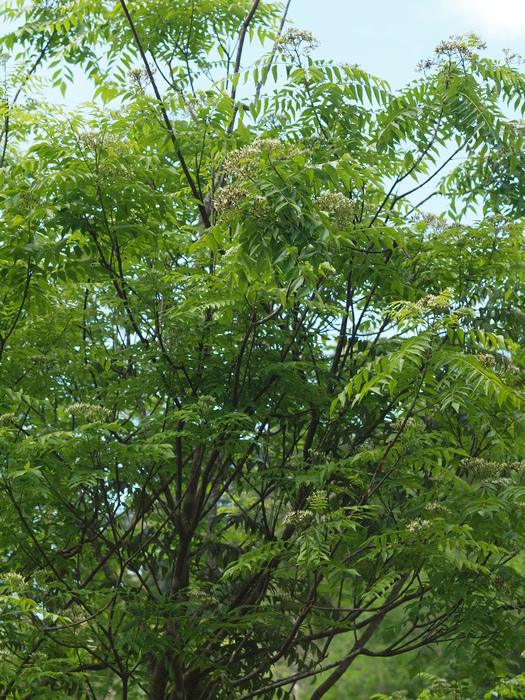
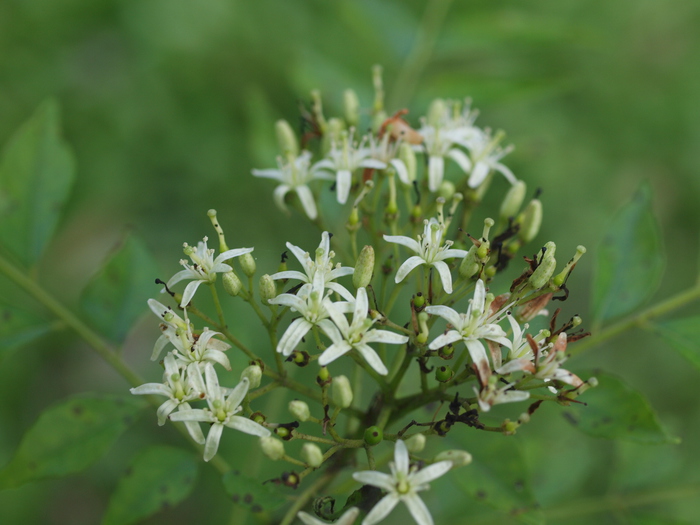
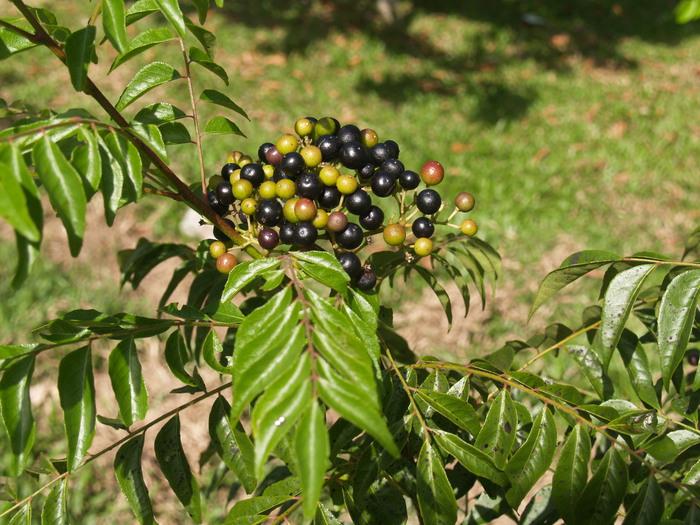
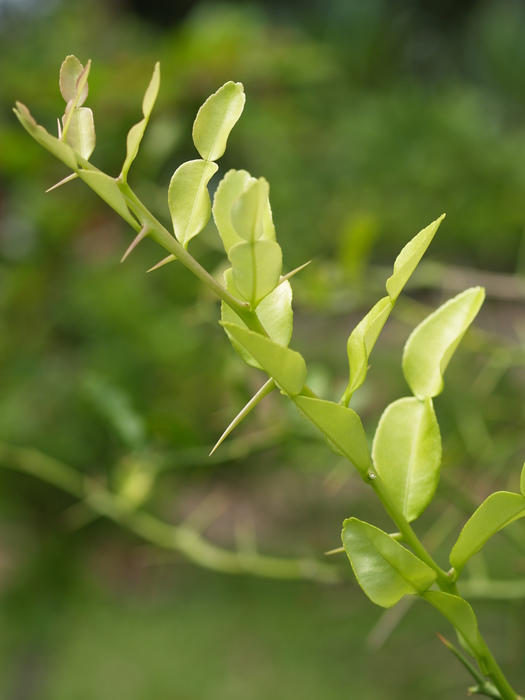
Murraya koeningii,
curry tree and
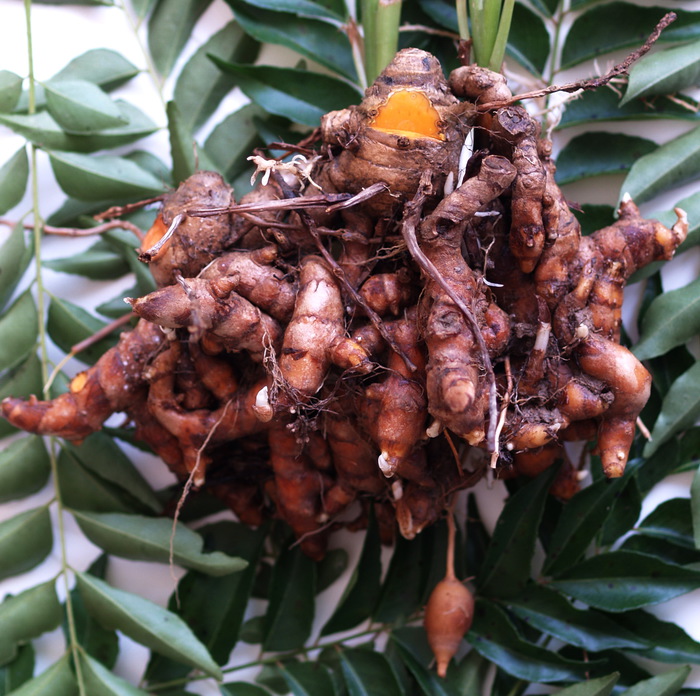
Curcuma longa, turmeric. Both species
are home in India, the land of origin of curry mixtures. Many other
spices can be added to make different tasting curries.
Curry leaf tree
The genus
Murraya is in the
Rutaceae, a family with about 1700
species in 158 genera. There are trees and herbs also outside the tropics.
Thailand has about 28 genera with 70 species.
All plants in this family have oil glands with a nice aromatic to
fetid smell.
The family is most known for the fruits in genus
Citrus:
orange, mandarins, lime, citron and many more. Some times these fruits
are only cultivated for the volatile oil in the peel of the fruit.
For example the volatile peel oil in
C. bergamia fruits is the
bergamot oil in 'eau de cologne' and 'earl grey tea'.
The genus Murraya has about 15 species, 3 in Thailand. Two
species are cultivated in Thailand.
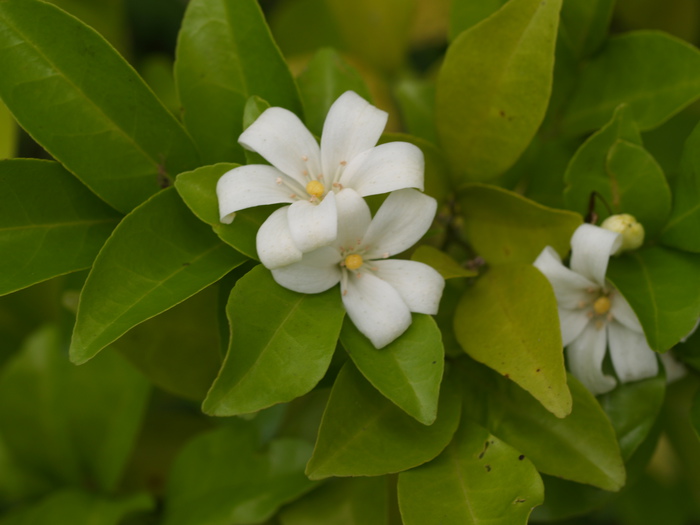
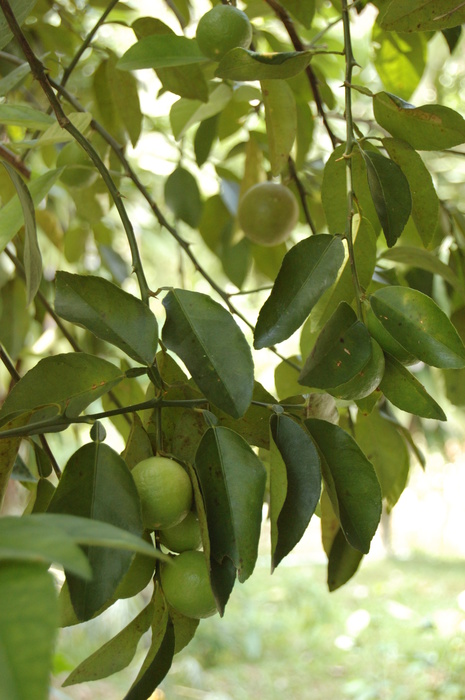
M. koeningii syn. M. foetidissima Thai name หอมแขก (hohm khaek) curry tree or bush. It is up to 15 m. The green divided
leaves of this tree are the name giving ingredient in curries. The
Thai name means 'good smell of India', the Latin word foetidissima
means 'top of bad smelling'.
The leaves should be used fresh. On drying the volatile oil is
spoiled.
M. paniculata, Thai name แก้ว (kaeo), Burmese boxwood. It is
planted as an ornamental tree, with white good smelling flowers. The
flowers are used for decoration and in cosmetics. The red ripe fruits
are eaten raw.
The leaves, bark and fruits are used medicinally against venereal
diseases, intestinal worms and dysentery.
The wood, special of the roots of Murraya species are used
for decorative objects from chessman, flutes to walking sticks. The
wood is hard, very strong and durable.
Turmeric
Curcuma is a genus in the
Zingiberaceae family,
largely of tropical herbs. The family has about 1400 species in ca 50
genera. In Thailand about 300 species in 26 genera.
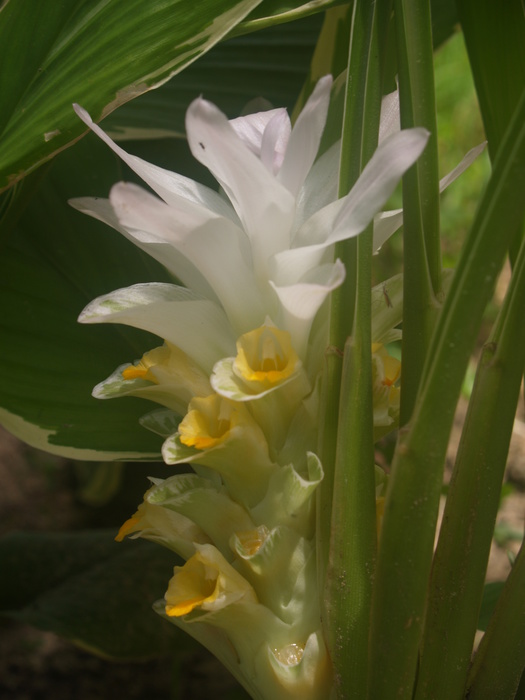
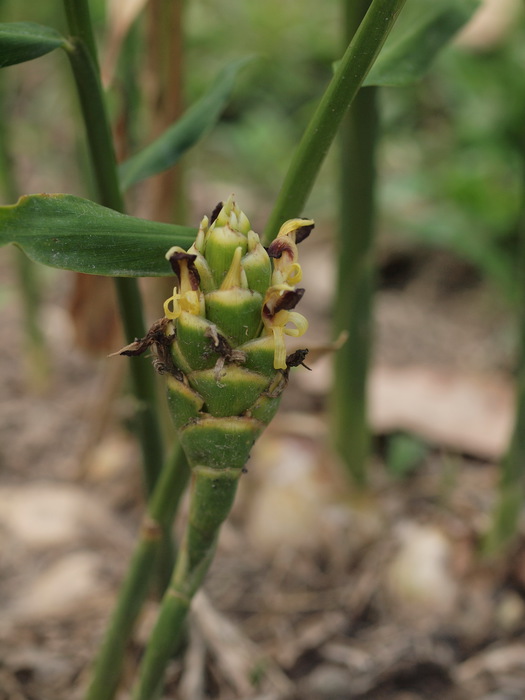
The flowers has an calyx and corolla of 3 slips. The showy part of
the flowers are modified stamens (staminodia): the lip like structure (labellum)
are two staminodia, and the slips along the labellum are each one
staminodium. There is one functional stamen present.
Many species are cultivated worldwide as spice, medicinal or
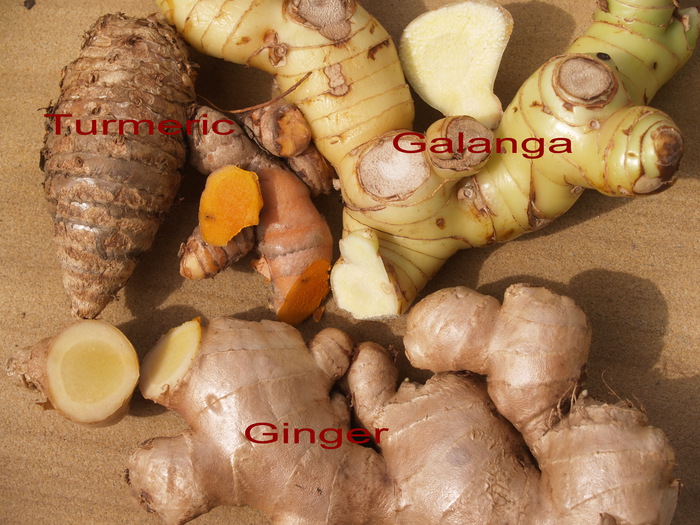
ornamental plants. Spices like ginger, galanga(l), cardamom and
Chinese keys belong to this family.
All plants in this family are aromatic plants with a creeping
underground root system (rhizome). The flowers are at the end of the
leafy stems or on separate leafless stems from the rhizome. Rhizomes
and seeds are used as spice or medicine. If a species has a large
rhizome it can alsao be used a source of starch.
The genus Curcuma has 80 species, in Thailand 50. Curcuma
plants have flowers on separate stalks growing from the rhizome. The
top of the inflorescence has showy bracts without flowers and is named
comosus, the flowers are in the lower part of the inflorescence.
Big rhizomes are useful as a source starch.
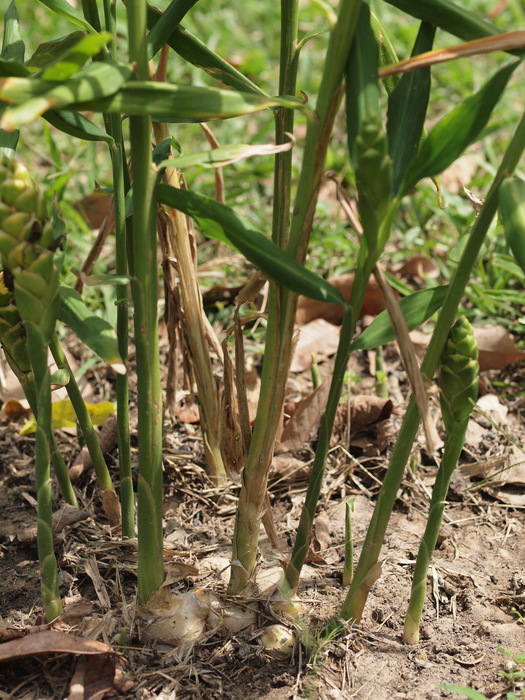
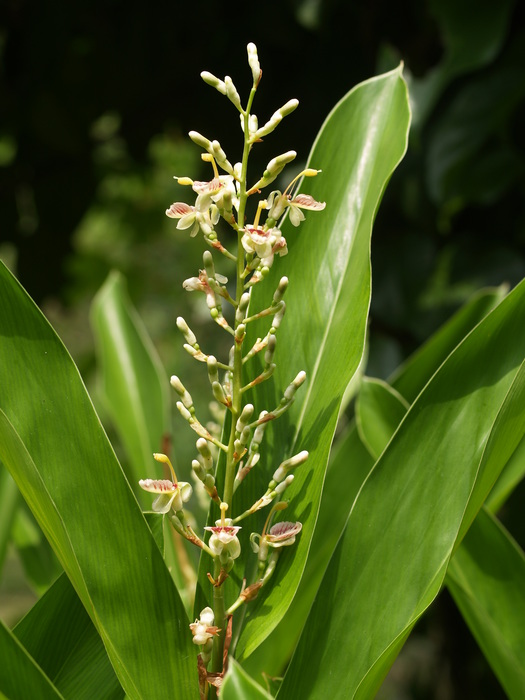
C. longa or C. domestica Thai name ขมิ้น (khamin) turmeric
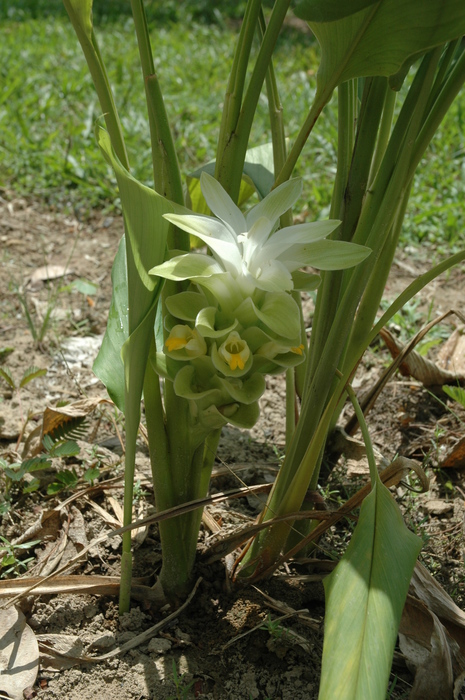
(Eng.) curcuma (Fr.) kunyit (Malaysia) The plant is up to 1 meter. The comosus
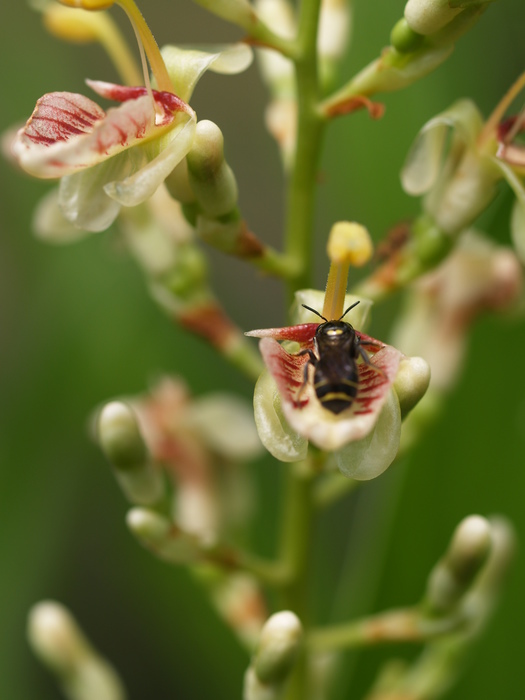
is white, the flowers are white with a yellow spot on the labellum.
The rhizomes are colored deeply orange-yellow and have spicy, aromatic
taste.
This is the spice that gives the intense yellow color to curry's,
piccalilli, sauces , plastics and your fingers. The young shoots and
rhizomes of the plant can be eaten as a spicy vegetable.
The plants are only known in culture and are a seedless triploid hybrid.
The origin is S. or S.E. Asia. India is considered
as a center of domestication. Cultivation is possible in all tropics
areas, but India and S.E. Asia are the most important producers.
The aromatic compounds in the roots are volatile oils with
turmerone and zingiberene and other compounds. This turmeric oil can be
used as spicy component in the food and fragrance industry. The
yellow-orange color is a mixture of curcumines, and is only found a
few other plants in this genus. These are the antioxidant components
in the powder. They are used as dyes in pharmaceuticals, foods and
textile. As a dye it is a good substitute for saffron, the most expensive spice.
In Thai cooking the fresh roots is used. Turmeric powder is
prepared from cooked rhizomes because the fresh roots are to corky for easy
drying. Turmeric powder should be kept in dark and airtight containers. The
volatile oil and curcumines are spoiled by light and oxidation.
As a medicinal plant it shows pharmaceutical activity against cancer,
dermatitis, high cholesterol levels and AIDS. It also has insecticidal,
fungicidal and nematicidal activity.
Other plants of these two families in the garden
Rutaceae
The garden has 7 genera and 16 species, 9 species in Citrus.
-
Citrus aurantifolia Thai name มะนาว (ma naow), the common lime, the
fruit that sailors used to prevent scurvy. The juice is an ingredient
in many drinks and dishes with a sour taste like dishes starting with
"tom yam .." or "laab ..".
-
Citrus aurantium Thai name ส้มซ่า (som saa), sour Orange. This tree
delivers the officinal orange flowers used in teas and perfumes. The
peel of the fruit is the source of orange bitters.
-
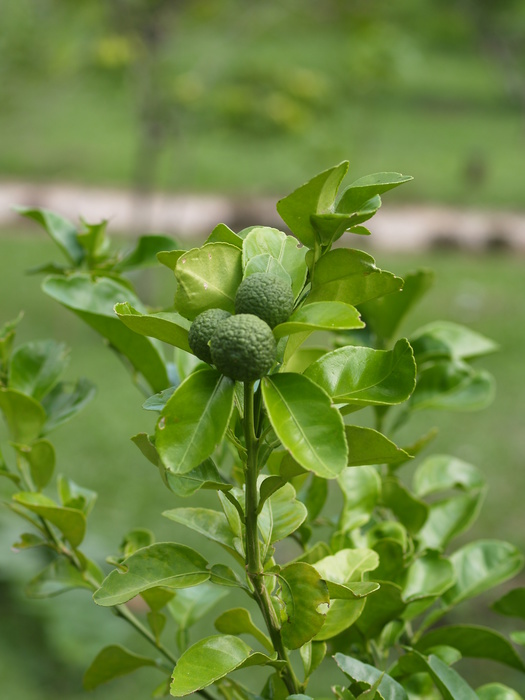
Citrus hystrix Thai name มะกรูด (ma kruut), leech lime. The fresh
fruit can be used, but it’s the leaf with a harsh citron-like smell
and taste that is used in soups and many other dishes for a strong
citron aroma.
In dishes in Thailand you have to take out the leaves by your
self, the leaves are not nice for eating.
Zingiberaceae
The garden has 10 genera and 50 species, but many plants have a Thai
name only or no name at all. A few examples.
- Alpinia galanga Thai name ข่า (khaa) galangal,(big) galanga or
laos. It is a very common spice in soups and curries. Plants in this
genus has their flowers on top of the stems.
- Alpinia officinarum Thai name ข่าเล็ก (khaa lek), lesser galanga. In
scientific names words starting with offici~ means that this plant
has been or still is used in the Western world pharmacies. All parts
of the plants of this species are smaller than from the big one, but
the taste is more pungent. The use is the same as for big galanga.
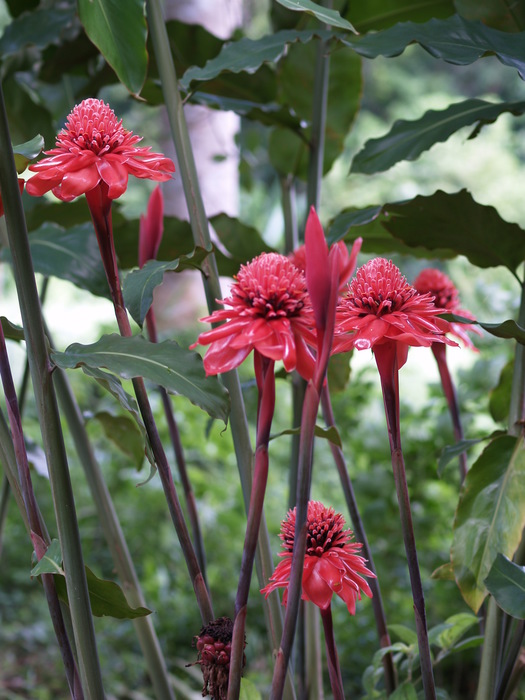
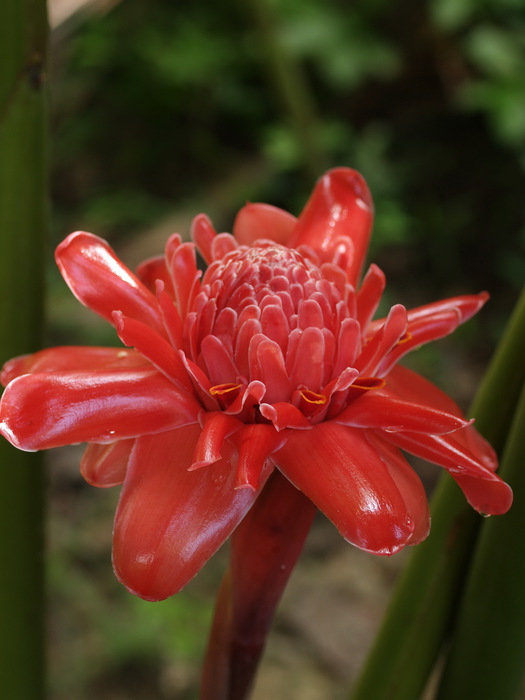
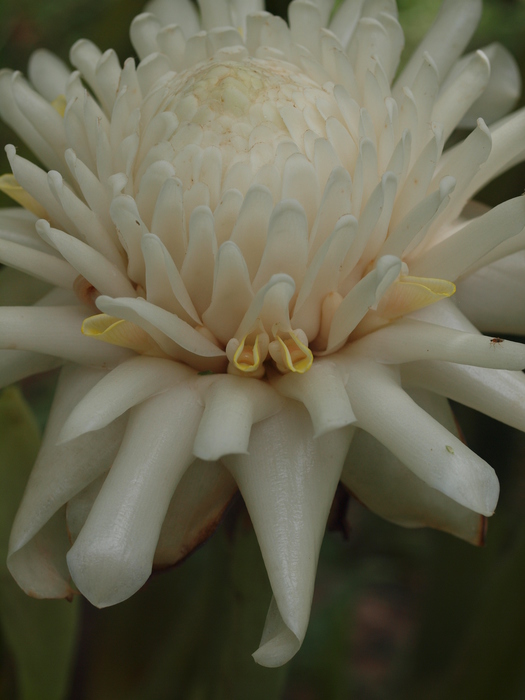
- Etlingera elatior Thai name กะลา, ดาหลา ( kalaa , dalaa) , torch
ginger. The flowers red, pink or white are edible and cooked in bud as
vegetable.The roots can be used as a substitute for ginger. But the taste
is different. A very popular ornamental plant in S.E Asia.
More information
Information on PROSEA
An important source of information is PROSEA, a collection of 24 books in 19 volumes with information on South East Asian plants.
See
PROSEA.
This text is largely based on PROSEA 5(3), Timber Trees: lesser-known timbers p 389-391 (Murraya); PROSEA 13, Spices
p 111-116. (Curcuma longa).
web site for spices
The best site for spices is certainly the web site by
Gernot Katzer in Austria.
Here you can find the names of spices in many languages, and information on the use of spices and even recipes for cooking.
This is the link to his
English index of spice names.
Next links are to this side:
curry,
curcuma.
The gingers of Thailand by K. Larsen and S.S. Larsen, 2006
Queen Sirikit Botanic Garden, Chiang Mai; ISBN 974-286-040-8
A nice illustrated book over Zingiberaceae in Thailand, with
a key to the 26 Thai genera (450 ฿ ).
Chapter 1 is an interesting introduction to the history of plant
collections in Thailand. The real exploration started in 1902 with
A.F.G. Kerr, an medicinal doctor. In 1920 Kerr was founder and director
of the first botanical institute in Bangkok, the first herbarium in
Thailand. This is very late compared with Western colonized countries.